
What is Irish Dance?
Irish dance or Irish dancing is traditional Gaelic or Celtic dance forms that originated in Ireland. It can be performed as a solo or in groups of up to twenty or more trained dancers. In Ireland, Irish dance is part of social dancing or may be for formal performances and competitions.
It is performed traditionally with intricate foot work and is most known for the dancers performing with a stiff upper body. Unlike other dance forms, Irish dancers do not move their arms or hands so that footwork is accented.
Why do Irish Dancers Where Different Shoes?
Irish dancers wear two basic types of shoes. For Flat Down step dances(hard shoe), both males and females wear shoes that are an oxford style with a thick heel with metal cleat attached to the full heel and a thick frontal sole that also has a metal cleat attached. The oxford is usually black leather, has laces and a leather strap to secure the shoe to the foot.
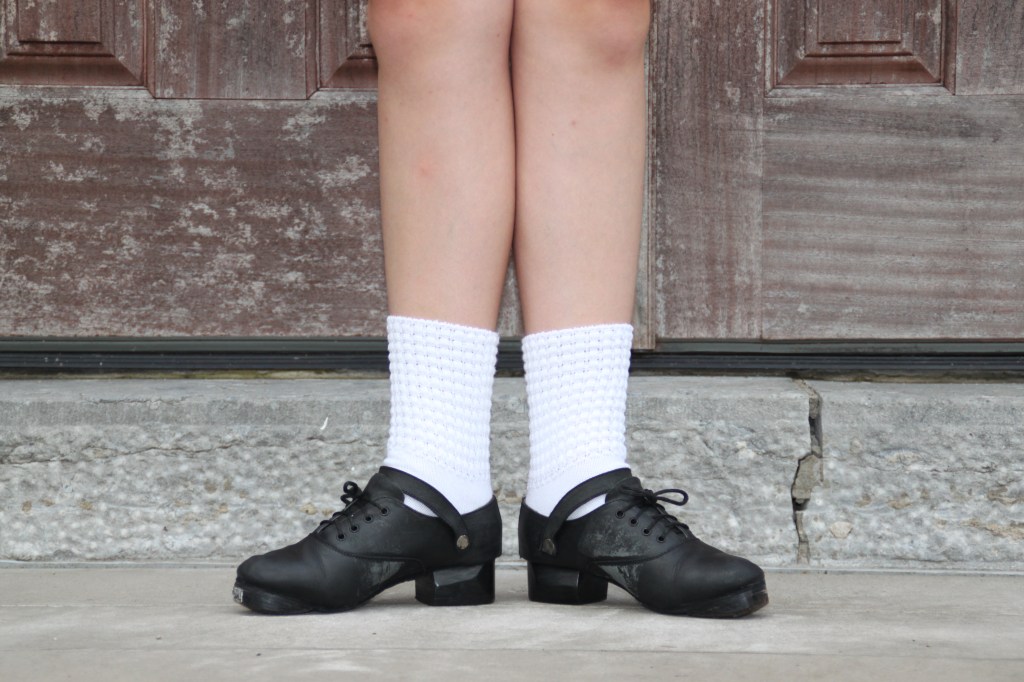
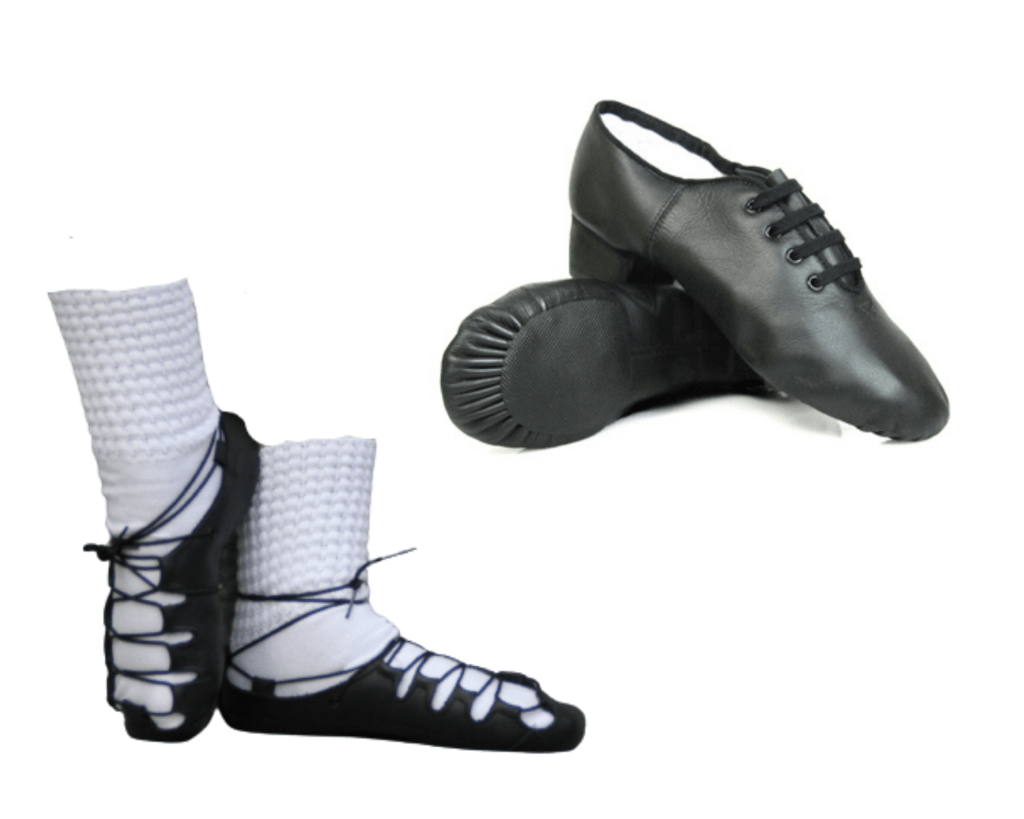
Female dancers wear black leather “Ghillies” that have soft soles for flexibility for Ballet Up steps(soft shoe). The soft leather of Ghillies help Irish dancers perform dance steps either on the balls of the feet or on tips of their toes.
For Ballet Up dance(soft shoe), shoes for males also have soft soles.
What is “Ceili”?
Ceili (pronounced “kay-lee”) is a Gaelic word for a social gathering with music and dance.
In Irish Dancing “Ceili” refers to the traditional group dances performed by up to twenty dancers.
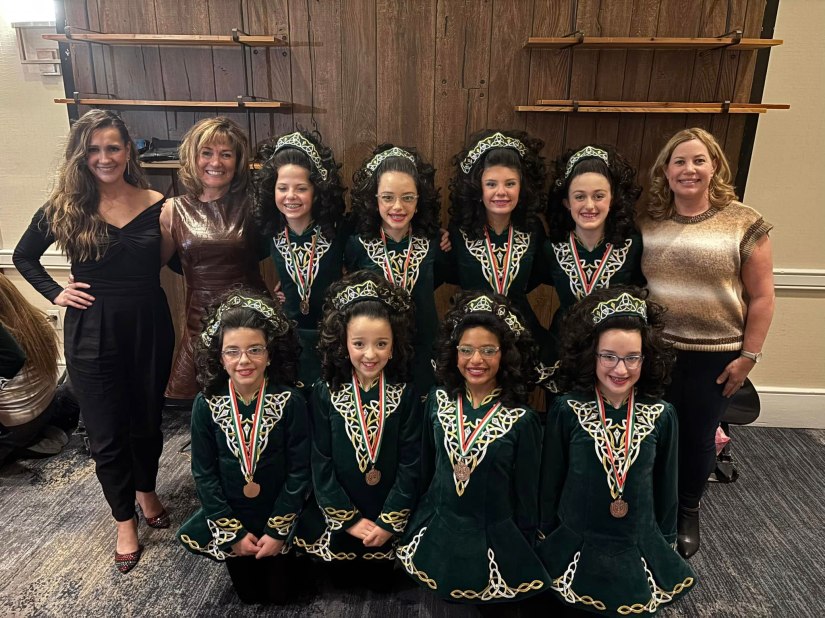
What is a “feis” or “feisanna”?
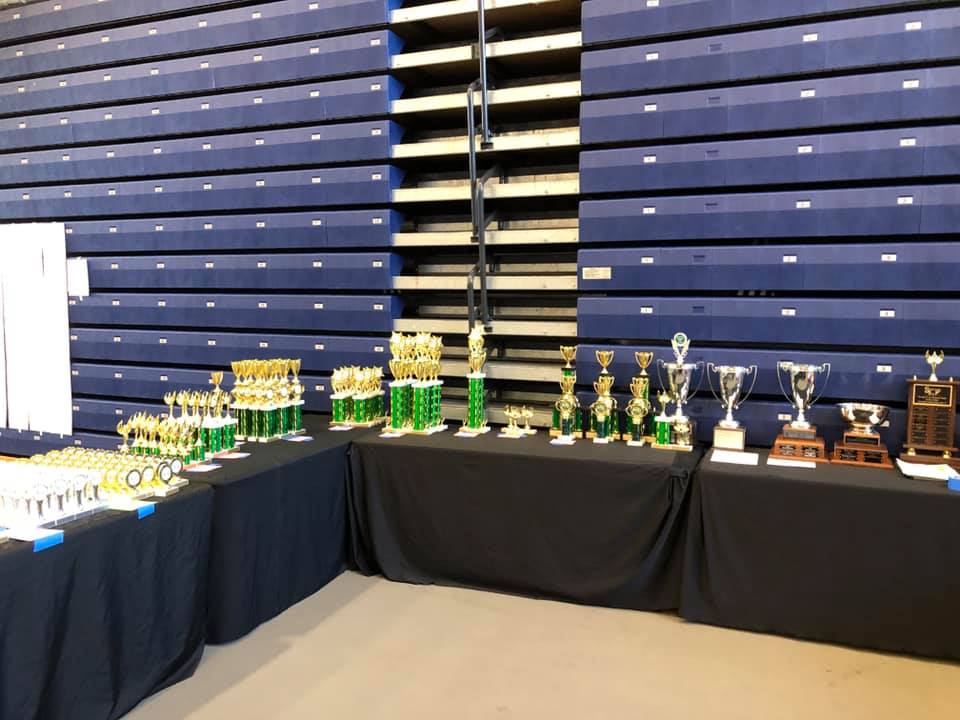
Feis (pronounced “feh-sh”) is the Gaelic word for festival. It also refers to an Irish Dance competition.
The plural of Feis is Feisanna (pronounced “Fesh-ah-nah”)
What are the different dances?
There are four soft shoe dance styles: the reel, slip jig, light jig, and single jig (also referred to as hop jig).
Hard shoe dances include the hornpipe, treble jig (also called the heavy jig or double jig), treble reel (hard shoe dance done to reel music) and traditional sets.
“Traditional Sets” are a group of dances with set music and steps. Many traditional sets have irregular musical phrasing. Here are multiple traditional sets, including St. Patrick’s Day, Blackbird, Job of Journeywork, Three Sea Captains, Garden of Daisies, and King of the Fairies.
How is the music different?
Reels have a 44 (or sometimes 24 or 22) time signature.
Slip jigs are in 98 time.
Light and single jigs are in 68 time, with different emphasis within the measure, distinguishing the music.
Hornpipes are in syncopated 24 or 44 time.
Treble jig music has a slow 68 time signature.
What’s the big word beginning with “O”?

OIREACHTAS (eer-uhkh-tuhs) is the Gaelic word for assembly.
In Irish Dancing, it refers to the annual Regional Championship. Oireachtas includes solo and Ceili competitions, and is a qualifying event for the World Championship.
Younger dancers participate by teacher invitation. Older and upper-level dancers must qualify to participate.
There are five regions in the United States: New England, Eastern (Mid-Atlantic), Mid-America (Midwest), Southern, and Western United States.
 Johnston School of Irish Dance